
Top 4 Cities in Japan for International Students

Japan is famous for its combination of rich history, advanced technology, and authentic culture. It is one of the best destinations for foreign students with academic achievement alongside an exciting life. As an applicant who is willing to pursue studies in Japan, it is important to consider where to pursue studies. Where you choose to study will affect your academic, career, and life experiences. Here’s a guide to the top 4 cities in Japan for international students. 4. Fukuoka Kyūshū’s island of Fukuoka is considered to be one of the finest cities in which to study and learn. It is renowned for being cheap, rich in culture, and boasting excellent public transport, and Fukuoka offers a great balance between study and lifestyle. University Accommodation & Rent Job Prospects Departments with High Job Prospects 3. Osaka Osaka is Japan’s second largest metropolitan region by population, which is highly renowned for its urban economy of life. It is not only a destination for historical points of interest but also has an excellent employment sector and immense foreign student scope. University Accommodation & Rent Job Prospects Departments with High Job Prospects 2. Tokyo Japan’s capital, Tokyo is surely one of the most desirable cities for overseas students. With the urban fabric woven of tradition and modernity, Tokyo offers a vast array of academic courses and professional career options in almost any sphere. University Accommodation & Rent Job Prospects Departments with High Job Prospects 1. Kyoto Kyoto, the cultural capital of Japan, is the ideal blend of tranquility and the height of modernity. While the city’s population is smaller than Tokyo or Osaka, the city is famous in the nation for the top ranking of the universities, peaceful lifestyle and educational institutions. University Accommodation & Rent Job Prospects Departments with High Job Prospects Conclusion Selection of a city in Japan is highly subjective, depending on factors such as university standing, employment opportunity, lifestyle, and pricing, and that results in different levels of contentment across a population. Whether you’re drawn to the tech hub of Tokyo, the historical beauty of Kyoto, the commercial dynamism of Osaka, or the student-friendly atmosphere of Fukuoka, Japan has a city that caters to every need. In spite of a high standard of living in certain cities, Japan provides a wonderful destination to study and build, thanks to its most well-reputed universities, low living cost in certain cities and excellent career prospects.
STEM Courses in Japan – Best Universities & Future Careers
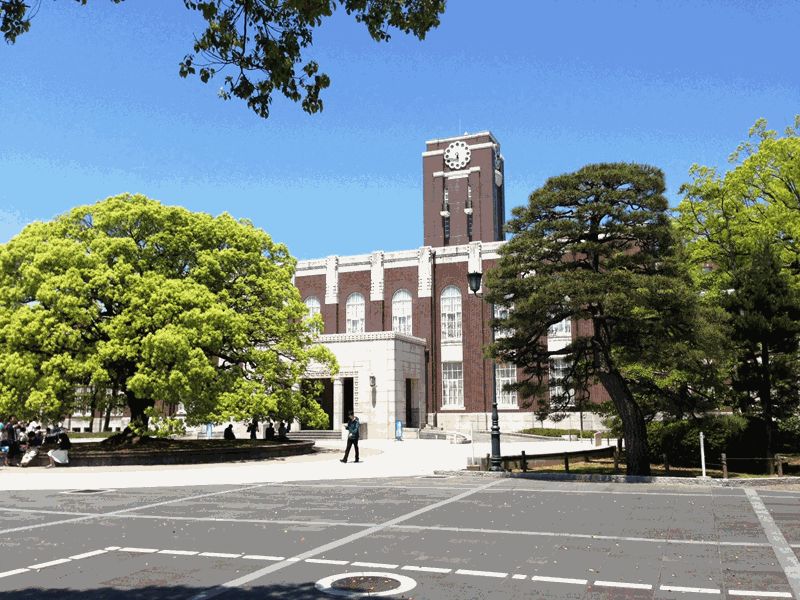
Japan is a viable choice nowadays, as is the rest of the world’s countries, for students looking for higher studies in Science, Technology, Engineering, and Mathematics (STEM) besides its relevance for future research, culture, and technological advancements. Not only does the nation have a great variety of courses in STEM on offer, but since most are English will have access to vast education, excellent research and career prospects in the best environments if available outside their home country. This blog would discuss some of the top universities in Japan that provide STEM courses. Why Study STEM in Japan? Top Universities for STEM Courses in Japan 1. The University of Tokyo (Todai) As Japan’s most prestigious university, The University of Tokyo is a top choice for students pursuing STEM courses. Todai offers a wide range of programs in engineering, computer science, and natural sciences. Career Prospects: Todai graduates are employed in high-paying positions in some of the best-paying companies in the technology industry, including Sony, Mitsubishi, Panasonic, and numerous other companies. This is the domain of the best-paying professions of AI, robotics, and software engineering. 2. Kyoto University Established at the time of Meiji Restoration, Kyoto University is world-famous for research and academic reputation, particularly in the field of STEM. Provides world-class courses in engineering, physics, and life sciences. Career Opportunities: Kyoto University graduates often work in prestigious Japanese research labs, global companies, or even governmental agencies. Graduates in engineering, IT, and environmental sciences are highly recruited by industries like renewable energy, automotive, and telecommunications. 3. Osaka University Located in Japan’s second-largest metropolitan area, Osaka University is a key player in the STEM education sector. Its research in technology and engineering is of global quality, and it attracts the best minds globally. Career Prospects: These graduates are typically recruited by the IT, robotics, and energy industries, where their average salary is usually ₹2.5-4.0 lakhs/month for freshers. 4. Tohoku University Tohoku University is one of Japan’s oldest and most prestigious universities, recognized globally for its research output in the fields of engineering, material sciences, and computer science. Career Prospects: Kyushu University STEM graduates are employed in energy industries, automotive and aerospace firms. Environmental science students also have increasing prospects because of Japan’s growing emphasis on sustainability and green technology. 5. Kyushu University Situated in Fukuoka, Kyushu University is one of the top universities in Japan, with a strong focus on engineering and science courses, particularly in fields such as environmental engineering and advanced materials. Career Opportunities: Kyushu University’s STEM graduates find work in energy sectors, automotive, and aerospace companies. Students specializing in environmental sciences also find growing opportunities due to Japan’s increasing focus on sustainability and green technologies. Average Salaries for STEM Graduates in Japan The Japanese employment market is among the most competitive in the globe. STEM graduates more often than not end up as jack-of-all-trades working in highly coveted sectors. The following are projected salary ranges for STEM graduates in Japan: Future STEM Career Prospects Japan’s technology-driven and innovative economy, therefore, makes it a potential place for STEM experts. Some of the best career prospects for Japan-bound STEM graduates are: Conclusion Pursuing STEM in Japan is a great opportunity to receive superb education in the world’s most advanced fields. There are a variety of STEM courses for international students to choose from in Japanese universities, and the graduate prospects are very strong. With high-paying jobs, excellent research opportunities, and the chance to work towards Japan’s science and technology advancements, a Japanese STEM degree can be your career-shaping decision. If your interest lies in innovation and technology, then Japan can most definitely be your final destination for success.
Starting Salary Post MS in India vs Singapore vs Australia: A Comparative Guide

MS in the right stream is a major career advancement milestone. For the international student, the country in which he does his higher education plays a big role in career prospects. This blog will contrast the starting salary after MS across three popular countries of study, namely India, Singapore, and Australia. How salaries vary among these countries, and what influences them, shall be discussed further. India: Starting Salary After MS India is becoming a fast-emerging destination for technology, engineering and business sectors which have a high demand for skilled personnel. Salaries after MS vary according to the field of study or university and location. Average Starting Salary: ₹6 Lakhs to ₹12 Lakhs per annum Key Factors Affecting Salaries in India Singapore: Starting Salary After MS Singapore has become a global business and technology hub, with a high standard of living, economic stability, and proximity to booming Asian markets. The country offers a wealth of career opportunities, particularly for graduates in technology, finance, and engineering. Average Starting Salary: SGD 4,000 to SGD 6,500 (approximately ₹2.4 Lakhs to ₹3.9 Lakhs per month) Key Factors Affecting Salaries in Singapore Australia: Starting Salary After MS Australia, known for its great education, laid-back lifestyle, and great career opportunities is a favourite destination for many international students. Cities like Sydney, Melbourne, Brisbane have much scope for MS graduates, particularly in IT, engineering, and healthcare. Average Starting Salary: AUD 60,000 to AUD 85,000 (approximately ₹33 Lakhs to ₹47 Lakhs per annum) Key Factors Affecting Salaries in Australia Comparing the Starting Salaries: India vs Singapore vs Australia Country Average Starting Salary Tech/IT Jobs Engineering Jobs Business/Finance Jobs India ₹6 Lakhs to ₹12 Lakhs ₹8 Lakhs to ₹12 Lakhs ₹6 Lakhs to ₹9 Lakhs ₹7 Lakhs to ₹10 Lakhs Singapore SGD 4,000 to SGD 6,500/month SGD 5,000 to SGD 6,500 SGD 4,000 to SGD 5,500 SGD 4,500 to SGD 6,000 Australia AUD 60,000 to AUD 85,000/year AUD 70,000 to AUD 85,000 AUD 60,000 to AUD 75,000 AUD 65,000 to AUD 80,000 Conclusion Where to study and work after MS should depend on your career goals, the industry you’re targeting and your long term goals. Australia and Singapore offer good salaries and career prospects so are best for students looking for high paying jobs post MS. But India with growing economy and competitive job market also offers a great opportunity to launch your career if you’re willing to take advantage of the country’s rapidly growing sectors like technology and business analytics. Studying MS abroad, regardless of the location, will surely give you rich skills, networking, and opportunities to start an excellent future career.
Settling in New Zealand post course completion- Visa Extension, PR, Salary

Embarking on a journey to settle in New Zealand after completing your studies is an exciting prospect. There is a clear roadmap to extension of stay, permanent residency (PR), earning, and other phenomena that the country has to offer to international graduates. Post-Study Work Visa On completion of your course in New Zealand, you can apply for a Post-Study Work Visa which enables you to acquire on-the-job experience. The validity of this visa is based on the level of qualification:. Master’s or Doctoral Degrees: Eligible for a 3-year visa. Other Qualifications: Visa stay coincides with the duration of your study program. Eligibility Criteria To qualify for the Post-Study Work Visa: Qualification Level: Must have completed a qualification at level 7 (Bachelor’s degree) or above. Duration of Study: The course (study) would have been undertaken by you full-time for a minimum of 30 weeks in New Zealand. Application Timing: Within six months of qualification, you apply. Process of Application Gathering Documents: Acquiring your qualification certificate, passport, and evidence of funds. Submit Application: Apply via the Immigration New Zealand website. Pay Fees: Application fee NZD 1,670 (approx. ₹85,000). Await Decision: Varies in processing time; however, 80% applications are completed handling in 2 weeks. Permanent Residency (PR) With increased experience gained from working in accommodation on a Post Study Work Visa tier, one can apply for Permanent Residence. The Skilled Migrant Category is a common pathway that requires: Age: Under 55 years. Health and Character: Meet health and character standards. English Proficiency: Demonstrate sufficient English language skills. Work Experience: Occupations/jobs listed on the Long-Term Skill Shortage List) with relevant work experience. The Points System: Attain a minimum of 160 points, based on age, experience, and qualifications. Application Process Expression of Interest: Submit an EOI that outlines your qualification and work experience. Invitation to Apply: How? If you are chosen, you will receive an ITA to apply for residency. Submit Application: Provide necessary documents, including medical and police certificates. Processing: Processing times differ and so all data must be correct to prevent delays. Salary Expectations Salaries in New Zealand vary by industry and experience. The median annual earning is about NZD 60,000 ₹30,00,000 as o 2024). But that may vary with your field and status. Cost of Living The cost of living in New Zealand depends on your lifestyle and location. Major cities such as Auckland and Wellington are more costly, while smaller towns proffer one more affordable way of living. Final Thoughts Moving from student to professional status in New Zealand requires from the individual familiarity with visa conditions, national residency routes and financial issues. By staying informed and planning ahead, you can make the most of the opportunities New Zealand offers to international graduates.
New Zealand – The Underrated Study Destination

New Zealand is rapidly developing into one of the leading study locations for overseas students. Having a blend of first-rate academic instruction, a healthy living-learning environment, and an attractive atmosphere, it is a platform with immense opportunities for Indian students. Let’s discuss why New Zealand is an ideal place for your higher education. Why New Zealand? 1. Top-Notch Education New Zealand has eight universities that are internationally recognized and included in the top of the world. There are undergraduate and graduate offerings that span a multitude of programs including engineering, business, art, and science. The top universities in New Zealand include: These are not only institutions focused on academic excellence but also encourage research and, in some way, a practical style of learning, which, in turn, provides students with a holistic and complete learning. 1. Affordable Living New Zealand is relatively cheap when it compares with other popular destinations of study such as the U.S. or the U.K. This situation makes the country of New Zealand a very appealing country for students who have the desire of high quality education without heavy cost. 2. Work Opportunities The opportunity to work in association with studies is a major benefit of studying in New Zealand. International students are entitled to part-time employment of up to 20 hours per week during the term and full-time during university vacation. This provides a good opportunity for students to support themselves while gaining valuable work experience. 3. Scholarships for International Students The Scholarships for International Students in New Zealand are available, and hence education is now within reach for many. Resources such as New Zealand Scholarships, ASEAN Scholarships, as well as university-sponsored awards can assist with tuition and living costs. Some scholarships even include travel allowances, which can significantly reduce your overall costs. 4. Post-Study Work Visa Once you complete your studies, New Zealand offers a Post-Study Work Visa, allowing you to stay and work in the country for up to three years. This is a great opportunity for international students to have work experience in New Zealand, and that may help them apply for permanent residency if they decide to do so. 5. Safety and Quality of Life New Zealand enjoys a high quality of life. It is one of the safest countries in the world, with crime levels and a particular attention to the health of its population. For an international student, it’s not much effort needed to get used to the harmonious place. In addition, the country provides scenic views and the possibilities of doing many outdoor activities, hence you may go hiking in the country during the free time. Conclusion New Zealand is a good option for Indian students who want good quality education, low-cost living, and an average-paced life. Featuring top universities, job prospect, scholarship, and a secure environment it offers an ideal environment for academic and personal development. When it comes to studying abroad, New Zealand is certainly an experience to be had!